“West Point is wasted on cadets!”
As a Tac, this half-joking assertion by a visiting professor of history at USMA stuck in my mind. Cadets are so busy just surviving, they neither fully understand nor appreciate the long-term benefits of the often-painful process. Now, after 50+ years, I appreciate even more what West Point achieved. It’s not too much to say that my experiences at West Point shaped my character, purpose, vision, and goals in life more than any other place.
Clearly, it was there I was introduced to the Profession of Arms and the Brotherhood of Warriors into what became my life calling. West Point taught me how to think and act honorably; commit humbly to a cause greater than myself; live a rigorous, disciplined life in mind, body, and soul; experience daily situations to succeed or fail as a follower and leader; retain a good sense of humor, especially in the midst of high stress; and rely on the close support, strong encouragement, and teamwork of company and classmates who became – and remain – closest friends. All these hard-knock experiences and more come to mind.
One aspect, however, that stands out was setting priorities. As a Plebe, I learned quickly that much more was expected of me than I could deliver. Planning ahead, prioritizing tasks, and taking the right action at the right time was the only way to survive! Lesson learned: no plan survives first contact with the enemy but failing to plan is planning to fail. I grew accustomed to a life of action, not contemplation, first on a personal level, then as a leader. Under the daily stress of cadet life, a solid foundation was laid in setting priorities, making plans, and taking action to accomplish the mission: in classrooms, barracks, and in the field.
More important and enduring than any of those skills, however, were the relationships forged at West Point. The bonds of brotherhood sealed by trial during those four challenging USMA years laid the foundation for future bonds of marriage, family, faith, and service to others all my life. The ancient Celts had a phrase for those places where the physical and spiritual worlds seem to meet: “thin places.” For me and my family, West Point is a “thin place.”
By Eric Robyn
No Good Deed Goes Unpunished – 1970
I have learned over the years that connections with West Point classmates have become increasingly important – in good times and bad.
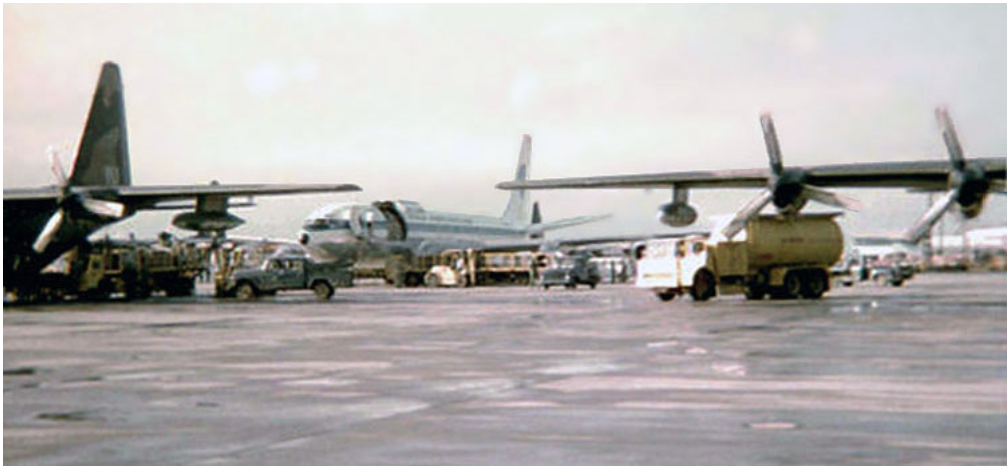
Classmate and fellow Field Artilleryman Dan Horne and I shared a flight to Vietnam … and then back again 1 year later. We met in the Atlanta Airport in early March 1970, as we bid a tearful good-bye to our beautiful new Army brides. We then flew to McGuire Air Force Base, NJ, where we caught a military-contracted commercial flight to Vietnam, landing near Saigon at Bien Hoa Airfield many sleepless hours later. What a surreal experience to walk off a commercial airliner into the middle of a war.
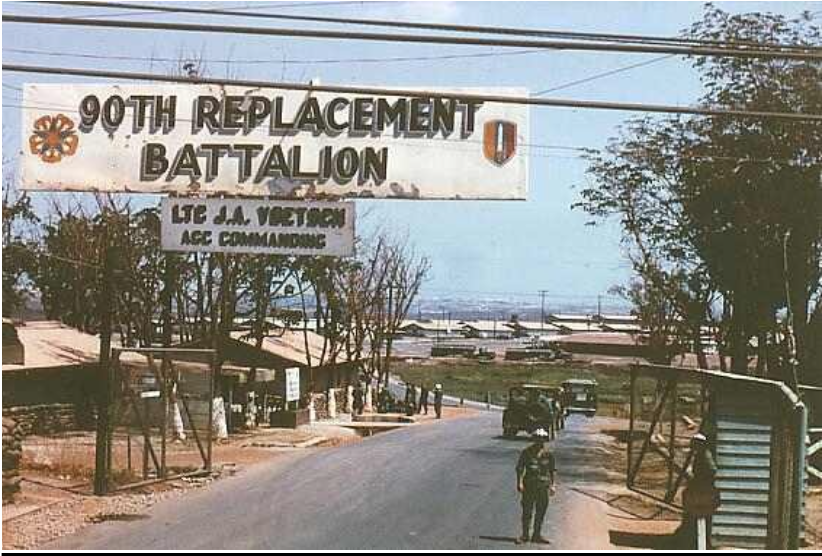
During initial in-processing at the 90th Replacement Battalion in Long Binh Post that first day in country, I was informed by the assignment clerk that I was to report to the Americal (23d Infantry) Division in Chu Lai, in the I Corps sector as soon as possible.
When I protested, showing him my written orders for 2d Battalion/19th Field Artillery in the 1st Cavalry Division (I had been carrying these orders since spring 1969, having since completed West Point, FA Officer Basic School and Ranger School) he told me the Americal had lost several field artillery forward observers (FO) and needed replacements right away. So I was told to get on the next flight north to the Division Headquarters in Chu Lai. Dan had orders for the 1st Cav as well (1st Battalion/77th Field Artillery), but found himself with similar revised orders to the Americal Division and once again we shared a flight, but this one without the commercial perks! We both were reminded of a simple truth about Army life: you go where you are needed at the time … regardless of previous orders.
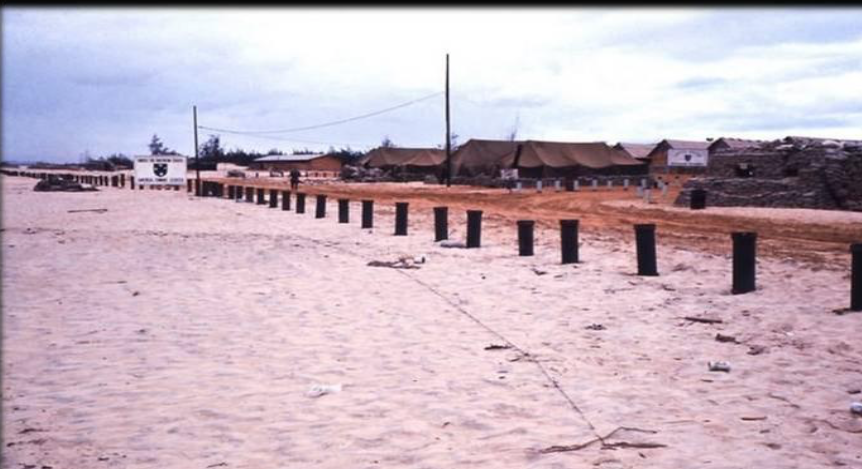
Dan and I were together when we reported to the Division Headquarters and started our week of orientation training, consisting of enemy tactics and techniques, patrolling techniques, security procedures, division policies, current enemy situation briefings, and getting accustomed to the temperature and humidity!
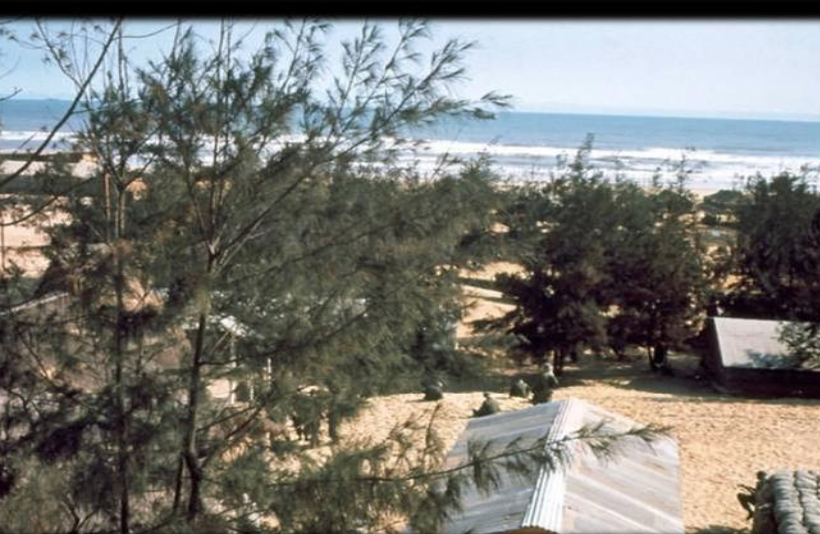
Near week’s end, we were given a couple hours of free time, so Dan and I walked to the beach on the South China Sea, fairly close to our billets, and we were joined by several others from our course. As we admired the beautiful and inviting sea waters, we all decided to cool off by swimming, not appreciating the treacherous riptide and undertow until we were well off the beach in deep water and being strongly pulled further out to sea! We realized then why signs on the beach warned of dangerous swimming conditions and no lifeguard. One guy in our group was even further out than the two of us, going under and yelling for help, so we both started swimming to him. Dan reached him first, got his head above water, calmed him, and started the long swim back as I stayed close to help if needed. Those Plebe swimming classes paid off that day. Although we were both exhausted, we felt we had done the right thing and had made a difference at least in the life of one fellow soldier.
You can imagine our surprise the next morning when we were told to report to our company commander to be severely reprimanded for swimming in dangerous waters without permission, using bad judgment, etc. Among other colorfully worded comments, he said he could end our careers with a written letter in our files if he chose to do so. Perhaps the shortage of FOs saved us, because he decided to let us go to our new units that morning with only the tongue lashing. Another lesson re-learned: no good deed goes unpunished. Dan and I said our farewells as we headed off to our respective assignments, hoping to see each other on the other side of our twelve-month deployment.
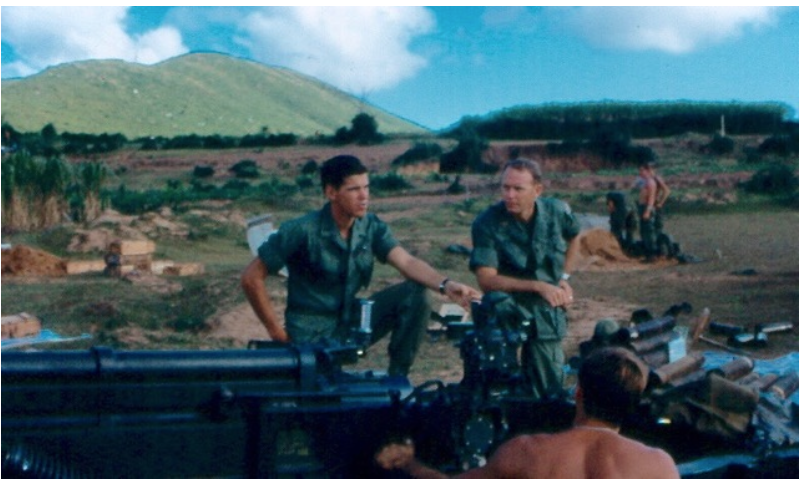
15 February 1971.
As the year-long combat tour drew to a close, I was amazed that we met again at Cam Ranh Bay, out-processing and waiting for the same “freedom bird” flight back to the States, together again! Dan, however, was more shocked than I when he saw me, saying, “I thought you had been killed!” I assured him I was still alive, not quick enough to remember Mark Twain’s clever line, “The reports of my death are greatly exaggerated.” Our last night in country, the specter of death visited again, as we were awakened by a 122mm rocket attack on the airfield, impacting near our barracks. By then, our “gallows humor” allowed us to laugh it off, remember other earlier close calls, and remind each other that somebody didn’t want us to leave alive!

Postscript: Our wives, having connected as we departed for a place half-a-world away, stayed in contact during that year of separation, since they lived within a few miles of each other. I was blessed, and I am very grateful today, to have shared with classmate “LT Dan” these “bookend” experiences of Vietnam.
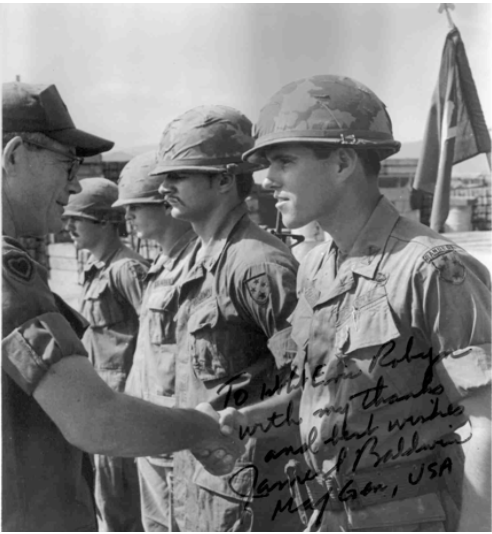
Unexpected Influence – 1973
By Colonel Eric Robyn, Aide to the Supreme Allied Commander Europe, 1983-1985
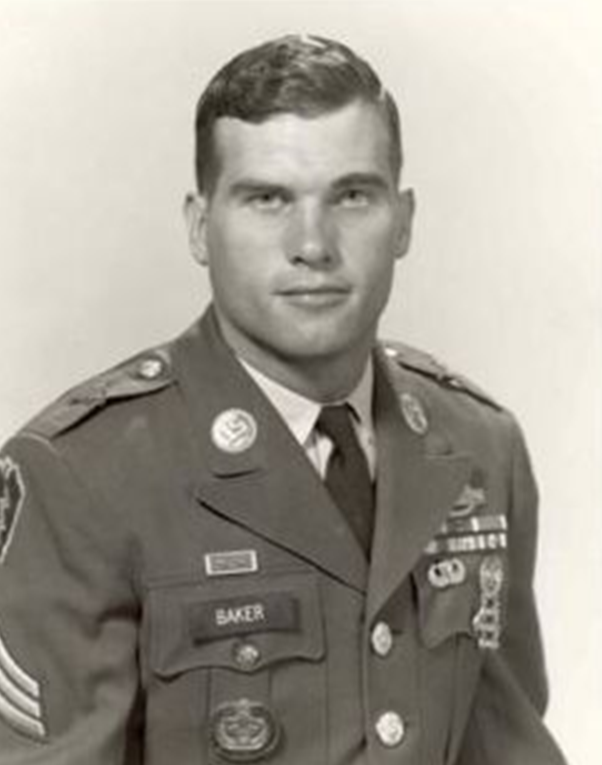
A Day with Sergeant John Baker,
Medal of Honor Recipient
As a Field Artillery Battery Commander assigned at Herzo Base (a former Luftwaffe base near Erlangen and Nuremberg) in Germany in 1973, I was used to preparing for, and enduring, all manner of inspections and visits from higher headquarters routinely. One inspection that always added stress to my life was the old-fashioned, compliance-oriented Annual Inspector General (IG) Inspection, made especially stressful because my unit was a nuclear-armed Honest John Rocket firing battery. Every aspect of the battery would be scrutinized in detail: not only soldiers, weapons, equipment, barracks, and vehicles, but also all written training records, manuals, forms, and files had to be in perfect order.

About a month prior to one of those IG inspections in 1973, a new soldier was assigned to my battery as Training NCO. His name was SGT John Baker.
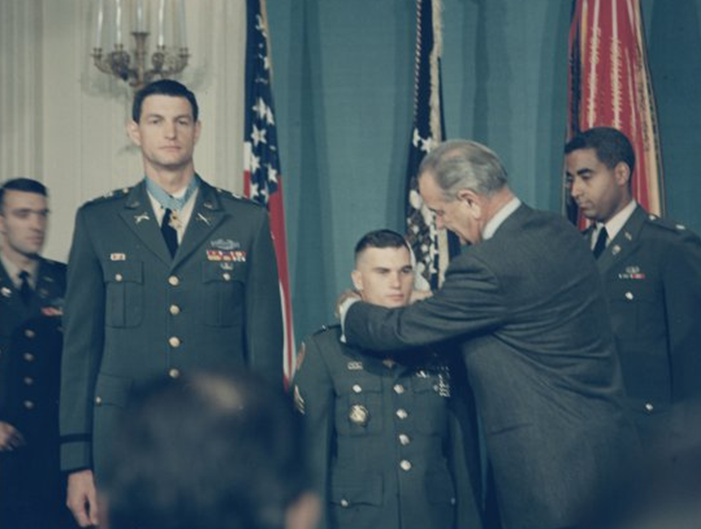
SGT Baker had been awarded the Congressional Medal of Honor (MOH) in 1968 for actions in Vietnam on 5 November 1966. In fact, his company commander, CPT Robert Foley (USMA ’63), was also awarded the MOH for actions that same day. SGT Baker told me that when President Lyndon Johnson made the presentations, he looked down at SGT Baker, at 5’2” the shortest MOH recipient, and up at CPT Foley, at 6”7’ the tallest MOH recipient, and exclaimed, “You two look like Mutt & Jeff!”
Knowing that a dreaded Inspector General (IG) Inspection was coming up, and painfully aware of how many training aids and various updated training publications we needed, I planned a trip to the USAREUR Publications and Training Aids Center in Frankfurt. I asked SGT Baker to compile a list of everything we needed, and invited him to accompany me. In those days, we wore fatigues every day, so I was surprised when SGT Baker hopped into my car the next day wearing his Army Greens with the distinctive Medal of Honor ribbon showing five white stars on a field of blue. Noticing my puzzled look, he said, “Don’t worry, Sir, you’ll see.” During our long drive to and from Frankfurt, we had plenty of time to talk and of course, he told the story of that day in November 1966. His citation for valor is well worth reading: http://homeofheroes.com/moh/citations_living/vn_a_baker.html.

When we arrived at the huge supply warehouse, manned primarily by active and retired NCOs, I confidently strode up to the counter and handed my long requisition list to the NCO in charge. He took my list, and looking it over, said it would take some time to gather all the materials and to prepare for a long wait because they were very busy that day. SGT Baker, who had been standing unseen behind me, then stepped to my right and up to the counter. I watched the look of complete surprise on the face of the NCO and others standing around as they recognized the venerable blue ribbon. They immediately came to attention and asked SGT Baker how they could be of service to him. When SGT Baker said he was with me and we needed the materials on the list right away, the response was awe-inspiring: “Not a problem, Sergeant, we’ll get everything right away! What else can we do to help you?” Not that I needed to be reminded of this simple fact, but that day I pleasantly observed how the MOH trumps a captain’s bars. With SGT Baker’s quiet – but visible – assistance, we returned with more than we needed and did well on the IG inspection.
Although short in height, SGT Baker was agile and physically strong. He was quiet, respectful, punctual, hard working, and dedicated to the Army and my battery. To this day, I don’t know how he ended up in my unit, but I was, and am, very thankful for him!
At Normandy with President Reagan 1984
By Colonel Eric Robyn, Aide to the Supreme Allied Commander Europe, 1983-1985
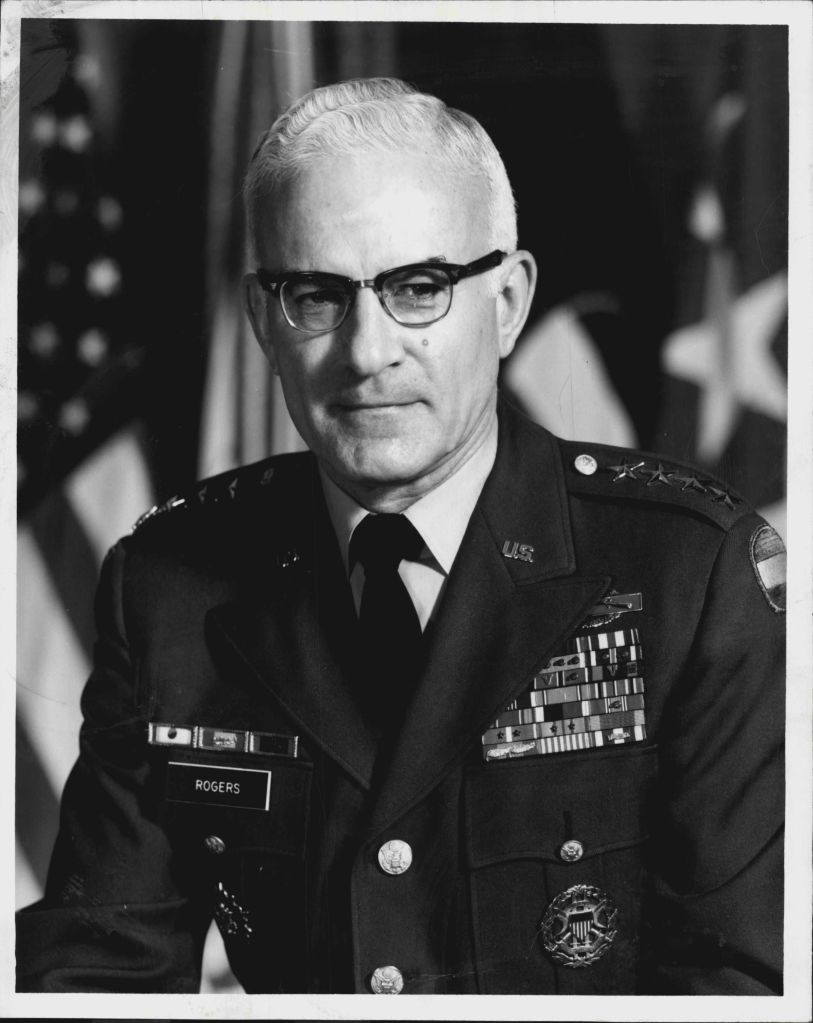
As Aide to the Supreme Allied Commander Europe (SACEUR), 1983-1985, I was privileged to accompany General Bernard Rogers (Commandant of Cadets when we graduated) on every trip he made. One of the most memorable was to the 40th Anniversary of the D-Day Invasion at Normandy on 6 June 1984.

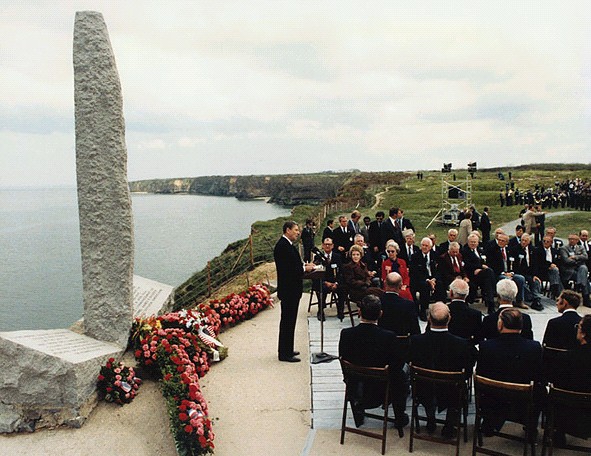
I had delivered Gen Rogers to the dignitaries’ waiting tent, where kings, queens, prime ministers and a host of other VIPs could mix and mingle prior to the ceremony. This was the occasion of Reagan’s famous Boys of Pointe Du Hoc speech. To get to the VIP reviewing stand on the bluff overlooking the beach, I hopped on a bus already very crowded with aides and reporters, including Sam Donaldson, well-known ABC White House correspondent. So I stood near the front of the bus by the driver, talking with President Reagan’s Press Secretary, Ron Speakes, ready to hop off and get to the reviewing stand quickly. When the bus stopped, I was just beginning to step off when Sam Donaldson bulled his way through the bus, pushing everyone aside so he could be first off. He elbowed Speakes and me aside and ran down the steps. It was one of the rudest displays I remember since grade school!

When I got to the reviewing stand, it was starting to fill up with VIPs, so I stood to the side, with no one else around, saluting these heads of state as they walked by me to take their seats. It was quite a show. As these notable dignitaries, including Maggie Thatcher, passed before me, few even acknowledged the presence of a lowly US Army major. Then I noticed President Reagan, unaccompanied, walking toward the stand and right in front of me, about 10 feet away. I stood at attention and saluted, as I had for the other heads of state, not expecting any return gesture. Instead, he looked right at me, smiled his famous broad smile, nodded as if to say thank you, and snapped off a crisp military salute. It made my day to be recognized by our Commander-In-Chief.