West Point is home to me. I was born there and spent fifteen of my first twenty-two years there. During childhood, I thought it was idyllic. Five other Army brats from my high school were going to go to the Military Academy, and convinced me to go, too. I thought it would be extremely tough, but would make me a better person, and it did. West Point was a level playing field, where success comes through perseverance and hard work, not from status beforehand. Besides the Ten Commandments, it is also my moral compass as stated in the motto “Duty, Honor, Country”. From my work as an Academy Admissions Officer, I’ve seen firsthand the political side of getting into West Point in the first place. My father was denied a nomination three years in a row because he didn’t have political connections. On the fourth try, his congressman directed a freshman congressman to nominate my dad, which he did. Dad finished first in his class and ultimately became a general.
My brother was nominated because of dad’s status as an active-duty soldier—not political. When my turn came, dad knew the drill. I prepped for a Civil Service Exam, scored 100%, got my congressman’s principal nomination, though he wanted to shunt me off to the Air Force Academy, and was admitted with a waiver for height. There is an instant bond with any other graduate because, though we might have come from different backgrounds, we all went through a very rigorous program. I remember one Superintendent saying that West Pointers don’t just meet standards, they set the standards. I met my wife there and worked there for another eleven years as a Department of the Army Civilian. I must say that working there as a civilian is far different from being a uniformed officer. Throughout a career in the Regular Army and Reserves the knowledge that I was a West Pointer spurred me on to do the best I could for our country.
By Bob Jannarone
Defining Moment 1972
by Bob Jannarone
A defining moment of my life came while I was a Company Commander at Ft. Benning, GA, in 1972. After about four months in command, I looked around one day and decided that my troops knew me and I knew them, and there was no one who would go AWOL (absent without leave).
I was right. My company went a whole month without an AWOL, and as a result, we received a training holiday. Then it went another month; then a third time, during which I received some new troops, and I impressed upon them that this unit had something going for it, and I was commanding the Company but very concerned about them. After our fourth month without an AWOL, I received a letter from the Commanding General commending me.
Meanwhile, two other companies succeeded for one month, though there were rumors about how they compiled their Morning Reports. Now it looked like the whole battalion was on track to receive a training holiday. There was only one more day to go, when a cook from Headquarters Company who had already been AWOL twice was sent to my company on a Rehab Transfer.
Sure enough, he was AWOL in the morning. I sent up a Morning Report listing him as AWOL. The Battalion Commander called me up to his office, along with his S-1. He explained that if I changed my report to list the man as being sent back to Headquarters Company, we would have our training holiday, and the next day he could be dropped from the rolls (DFR) of Headquarters Company after having been AWOL three times.
I went back to my unit, and then called my father, a Brigadier General, Chairman of the Cadet Honor Committee when he was a First Class Cadet, explaining that I thought that the Battalion Commander was quibbling, as we called it back at West Point.
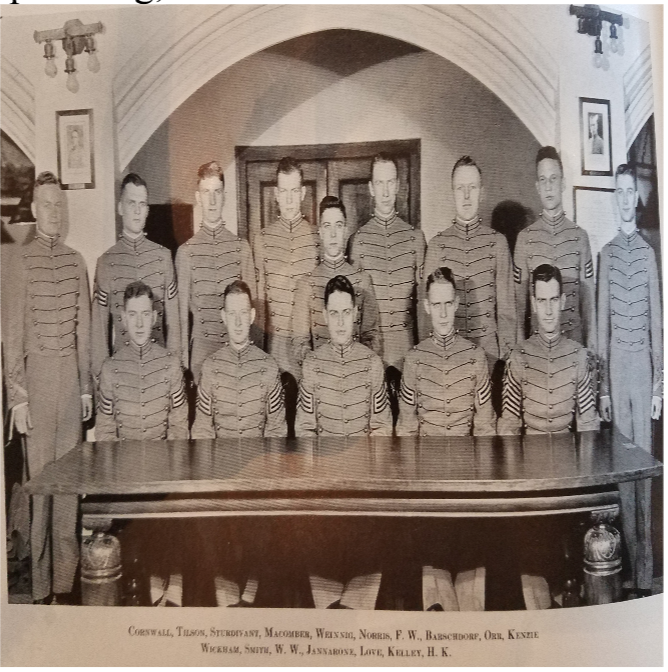
He was shifting from the point in question (AWOL) by using a seemingly unimportant detail (transfer between Companies). I wished to do “the harder right instead of the easier wrong” as we learned in the Cadet Prayer**, and fully expected that I might be relieved of command for refusing to change my report. I felt that I had to uphold the honor of the Corps. He agreed.
The S-1 submitted a report instead of mine. Although I wasn’t relieved, I received a mediocre Efficiency Report after a year, and left active duty after my five year commitment. I continued as a Reservist for 28 more years.
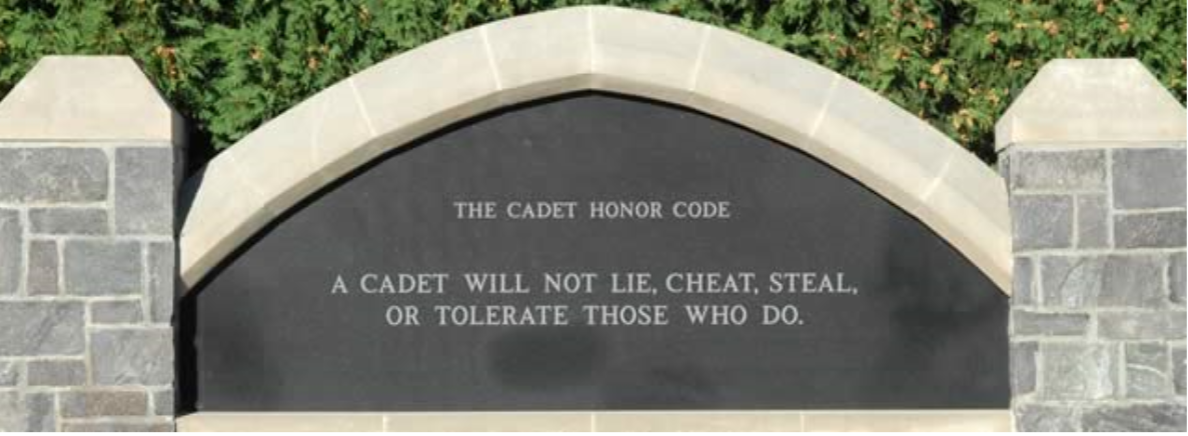
Follow-up: In 1974, when I was about to leave active duty, I was invited by the recently retired Chief of Engineers, LTG Clarke, USMA ’37, to his house for dinner. During the course of the meal, he asked about my next assignment. I told him about the Morning Report incident, and the mediocre OER. I was going to resign my Regular Army commission, and had already turned down my programmed assignment to civil school and then to teach Civil Engineering at West Point. He said his own son had had a similar incident the year before, and lamented the fact that it had happened again. The Engineer Branch is a small one and it was not hard to watch the career of the Battalion Commander who submitted the false Morning Report – it was a short one; I never knew exactly why. Maybe, someone noticed.
**USMA Cadet Prayer
O God, our Father, Thou Searcher of human hearts, help us to draw near to Thee in sincerity and truth. May our religion be filled with gladness and may our worship of Thee be natural.
Strengthen and increase our admiration for honest dealing and clean thinking, and suffer not our hatred of hypocrisy and pretense ever to diminish. Encourage us in our endeavor to live above the common level of life. Make us to choose the harder right instead of the easier wrong, and never to be content with a half-truth when the whole can be won. Endow us with courage that is born of loyalty to all that is noble and worthy, that scorns to compromise with vice and injustice and knows no fear when truth and right are in jeopardy. Guard us against flippancy and irreverence in the sacred things of life. Grant us new ties of friendship and new opportunities of service. Kindle our hearts in fellowship with those of a cheerful countenance, and soften our hearts with sympathy for those who sorrow and suffer. Help us to maintain the honor of the Corps untarnished and unsullied and to show forth in our lives the ideals of West Point in doing our duty to Thee and to our Country. All of which we ask in the name of the Great Friend and Master of all.
Amen

Court Martial – 1972
When I was the Company Commander of an Engineer Company at Fort Benning, Georgia from January 1972 to March 1973, I had several drug pushers and other malcontents. Once I was able to get rid of the drug pushers through administrative actions, everything fell into place. The rest of the troops were good people who did their jobs, and I felt very comfortable with them and they with me. We went months without an AWOL (absent without official leave), which was almost unheard of in those days.
Then one soldier who had gone AWOL twice from Headquarters Company was sent to me on a Rehabilitation Transfer. He went AWOL immediately. (Soldiers who were a problem were sometimes given a fresh start in a new Company. Once I tore up an Article 15 that had been sent by the previous commander, telling the soldier that he had a clean slate in this unit. That soldier was never a problem for me.)
Some months later another soldier went AWOL. This was a complete surprise. I called in the Platoon Leader, Platoon Sergeant, and Squad Leader. Everyone was baffled. This was on a Wednesday. Thursday afternoon, I received a call from a tire dealer in nearby Columbus, GA, who wanted to know about this soldier who wanted to purchase some tires on credit.
I told him that this was a very good soldier who for some reason was AWOL at this moment. A few minutes later, the soldier called in to me. I told him he was AWOL, that he had had no authority to be absent. He said he would be right in. But he didn’t come in that afternoon, or on Friday. Sometime over the weekend he returned, and reported for duty Monday morning.
I signed the Morning Report for Wednesday (the report that showed how many people were present for duty and what changes happened since the previous report). I went on leave myself over the weekend, and the report for the next Monday was signed by the Company Executive Officer (XO).
When I came back, I offered the AWOL soldier an Article 15. This is non-judicial punishment under Article 15 of the Uniform Code of Military Justice. I planned to give him a suspended bust. That is, he would be reduced in grade from a Specialist 4 to a Private First Class. In military grade, this would be E-4 to E-3. But, this reduction in grade would not take effect at all if he stayed out of trouble for the next two months, and then the paperwork would be shredded, with no record of the action.
He refused. He wanted a Court Martial. So I went to the Judge General’s (JAG) Office and arranged for a Summary Court Martial, the lowest form of court martial.
When the day came, my driver took me to the courthouse at Fort Benning, armed with extract copies of the Morning Reports for that Wednesday and following Monday. The Company Clerk had “extracted” the pertinent information from those records, indicating departure and return from AWOL, and showed that I had signed both. My signature verified that they were correct.
I sat in some room with JAG officers who had prepared the case, and with my driver, waiting for my turn to testify. After a few minutes, I realized that the second extract copy was wrong. The XO had signed the second one, not me. I told one of the JAG officers. Soon he came back saying that the judge wanted the whole Morning Report Book. So I sent the driver back the ten miles to our Company area to get it. Then a man in civilian clothes, jeans and plaid shirt, came in and lambasted me, saying if I had paid attention to what I was doing, there wouldn’t have been this big delay.
Everybody else was in uniform. I said to this man, “What are you, a wise guy, trying to rub it in. Why don’t you keep your big mouth shut?” The man walked out without another word.
The driver returned with the book. The trial resumed. Eventually I was called. I walked into the courtroom, saw several people in the audience, the witness on the stand, the prosecutor and the defense attorney. Then I saw the person who had been in civilian clothes. Now he had on a robe, because he was the judge!
I was speechless at first, but recovered in time to testify. The judge was very cool, asking why this was not an Article 15 proceeding. I explained that I had offered the soldier one on several occasions, including that very morning, but he wanted a Court Martial.
The man was convicted, he went downhill from there, and was eventually released with a General Discharge under less than honorable conditions some months
after I left Company Command. I never could find out why he went AWOL in the first place, or why he didn’t come in immediately when he said he would.
Pay Day – 1972
Pay Day – 1972
One day when I was a Company Commander at Fort Benning, Georgia, in 1972, I was assigned to be the Post Duty Officer.

That meant that I had to stay up all night and then report to the Assistant Commandant of the Infantry School in the morning, a one star general, at his quarters. I had seen this man when he played in the First Army tennis tournament at West Point in the early 60s, when he had been a Tactical Officer for one of the cadet companies, and I reminded him of that fact when I spoke to him. I was a ball boy for several years at that tournament. He knew my name because it is very uncommon, and he assumed correctly that I was a son of the Dean at West Point. We had a very nice conversation. He ultimately became a four star general.
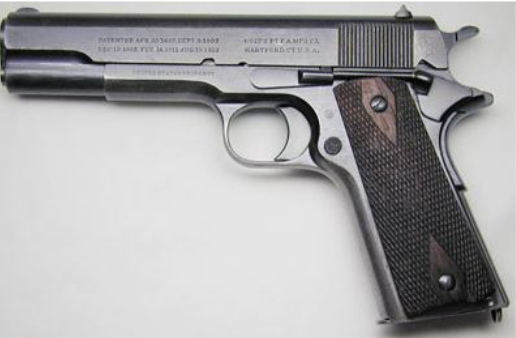
Ordinarily, I should have been able to go home and go to bed. But now it was pay day, the first of the month, so I drove from main post to the Harmony Church area, about ten miles away, to report for duty, get my Class A Agent Orders (allowing me to get my troops their money–everything was in cash back then) and check out my forty five caliber pistol and ammunition from the Weapons Room.
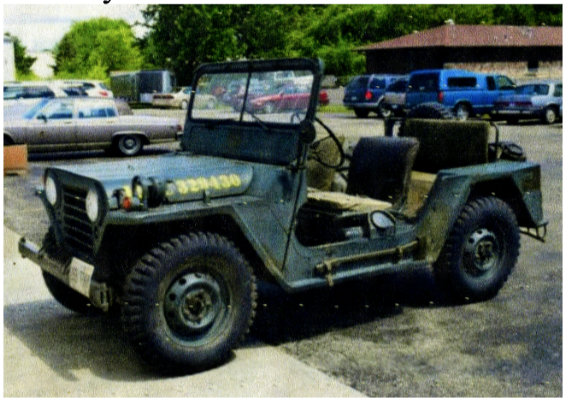
I had my assigned jeep driver bring me back to main post to the Finance Office to get the money to pay my soldiers. Once I was back in my Company area, I paid the soldiers who were there. But ten of my soldiers, one squad, were on an assignment in Atlanta, a hundred miles away.
Off went the jeep driver and me, first on Highway 27, a four lane divided highway, and then northeast on Georgia State Highway 85 (not to be confused with Interstate 85). I fell asleep a few minutes after we got on Highway 85, a two-lane road that wandered through one little town after another.
This is the same highway that I used to go the Army-Georgia Tech football game a few months later, speeding when I could because I only got the game ticket that Saturday morning, even though it had been mailed more than a week before from New York. I had a little over two hours to get to the stadium. I also had New York plates, and several local cops pulled up right on my tail as I went through their towns, daring me to speed up to put a little distance between my car and his. I drove the speed limit in those towns, but made up for it on open road. When it came time for me to renew my registration, I got Georgia plates. I got there for the invocation before the game, when the minister asked God to be just a wee bit on the side of Georgia Tech, who was a 30 point favorite. Army won the game.
Back to pay day. When the jeep driver braked suddenly and came to a screeching stop I was instantly alert.

In front of me I saw a pick-up truck forcing a car onto the shoulder of the two-lane highway. When both stopped, the driver of the pick-up hopped out with a shotgun in hand, ran around to driver’s side of the car, and stuck the shotgun inside.
To my young eyes, he looked to be at least seventy five. I could see that the passenger was a white haired woman, and the driver was a man, much younger. Then he fired. I don’t know exactly why I did it, but I leaped from the jeep, ran over to the pick-up truck driver, and wrested the shotgun from him. I’m not sure what he thought of me, dressed in an Army fatigue uniform and carrying a pistol, but he didn’t protest. I glanced into the car, and saw that neither person appeared to be hit.
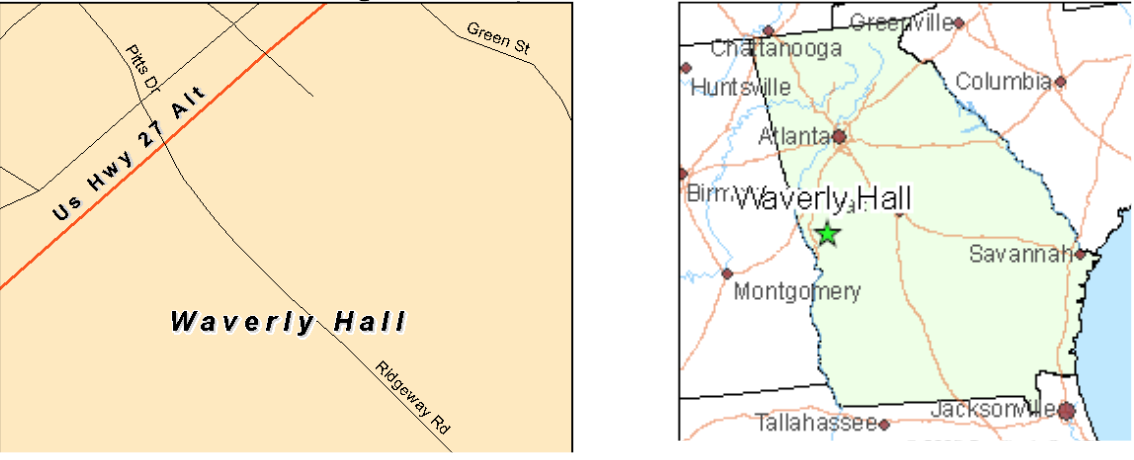
I then ran into the middle of the highway, shotgun held high, and saw a sign that said that Waverly Hall was just ahead.
I stopped the first car that came upon us, and asked the driver to go fetch the police from Waverly Hall.
After a few minutes, he came back and said that the policeman wouldn’t come because it wasn’t his jurisdiction. After a few more minutes, that seemed like an eternity, a Georgia State Patrol car arrived, and asked what happened.
Before I could utter a word, the pick-up truck driver said, “You want to know what happened. This is what happened. This woman, who used to be a lady, is my wife. And this here is Jim. He does odd jobs for us from time to time. Well, three days ago the two of them took off, and I just caught up with them.” I then told the patrolman that I witnessed the truck driver firing into the car and that I took the shotgun from him, and that I was on the way to pay my soldiers in Atlanta, still seventy five miles away. I gave him the shotgun and my name and address, and asked if he needed a statement. He said he could handle it from here.

With that, the Waverly Hall policeman, the stereotypical small town Georgia cop—big frame, big sunglasses, bigger belly—drove up and swaggered out of his car. The Patrolman said to him with a sneer, “You! Get out of here.”
He departed, and so did we. We never heard any more about it.
The Swearing-In Ceremony – 1993
After I completed the five year Active Duty obligation, I joined the Army Reserve. I soon found out about the Military Academy Liaison Officer Program, run by the Admissions Office at West Point, a largely unpaid program but very fulfilling. I also found a home with the Army Corps of Engineers, New York District as an Individual Mobilization Augmentee, training in Syracuse, West Point, and New York City. I worked in Rochester, NY for the DuPont Company, Photo Products Division. I realized fifteen years later that digital photography was eventually going to supplant silver halide film, and I was going to have to find another job. Twenty years to the day that I graduated from West Point, I started working as a Department of the Army Civilian as the Associate Director of Admissions for Plans and Programs.
Halfway through the 1992-93 Admissions Cycle, the Superintendent of West Point told the Admissions Office that he wanted to have no more than a certain number of cadets admitted that year. He undoubtedly got his marching orders from higher up. That was way too late, the Early Action Admission Cycle had already been completed, and by Law, vacancy fills had to be selected. Admissions did what it could, but that day, eight more young men and women reported than the Superintendent wanted. My bosses were very upset, not wanting to report that they had failed in this impossible mission.
The first thing to do at In-Processing on Reception Day 1993 was to sign the Oath of Office, making the new cadets members of the Armed Forces. That had been the last thing to do on my Reception Day in 1965. Then there was the drill of reporting to the Man in the Red Sash, who told people where to go next.

Eventually, on that day in 1993, three New Cadets were determined to be unable to complete the training because of physical problems encountered prior to arrival or during that day. They were sent to the Admissions Office to await further instructions.
I witnessed a heated discussion between the Staff Judge Advocate (the Legal people), a Major and a Captain; the Medical Department Commander; the Director and Deputy Director of Admissions; and the Master of the Sword (who ran the Department of Physical Education). Those four were full colonels. The legal people said that once they signed their names on that document, they were cadets. The Medical Department Commander didn’t take sides, but said he could treat them. The other three maintained that since they couldn’t do the training, they shouldn’t be allowed to go to the Swearing-In Ceremony, and since they wouldn’t be raising their right hands to take the Oath, they weren’t cadets. I was the only non-uniformed person there, a Lieutenant Colonel in the Reserves at the time, but a Department of the Army Civilian as far as they were concerned.
The colonels decided to give Letters of Assurance to the three, stating that if they received new nominations for the next class, admission was assured. I had to deliver that message to them and their parents. I very much wanted to confront the colonels with the fact that I didn’t go to my own Class of 1969 Swearing-In Ceremony. I couldn’t get in a word, but I knew better.
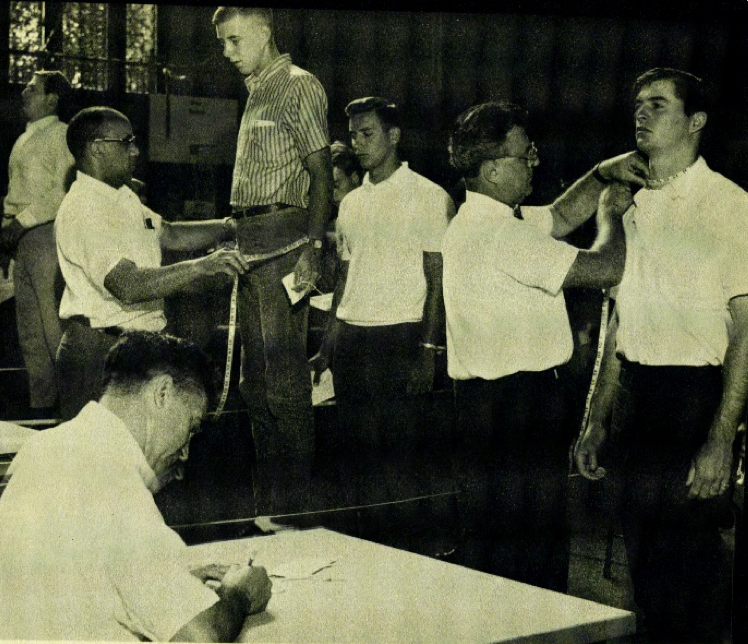
When I was first measured at the start of senior year in high school as a candidate for West Point, I was under 5 foot 4 inches tall. The height requirement at the time was 5 foot 6 inches to 6 foot 6 inches; that could receive a waiver to 5 foot 4 inches on the small side and 6 foot 8 inches on the tall side. Since I was too small, I was disqualified medically, but there was a provision that I could be re-measured closer to the time of admission for the class of 1969—July 1 of 1965.
Therefore, I embarked on a program of stretching exercises proposed and aided by several members of the Department of Physical Education at West Point. I hung, I stretched my back, I stretched my Achilles tendon and calf muscles. I did everything I could to get more distance between the parts of my backbone. I found out that the best time to be measured was first thing in the morning. When the big day came, June 15, the Army Doctor pronounced that I came in at 5 foot 4 and 1/8 inches. So with the waiver, I was qualified. A week later, at a Testimonial Dinner for my father, who had just been promoted to Brigadier General, my Representative in Congress, Peter W. Rodino, made the announcement that I had been offered admission to West Point.
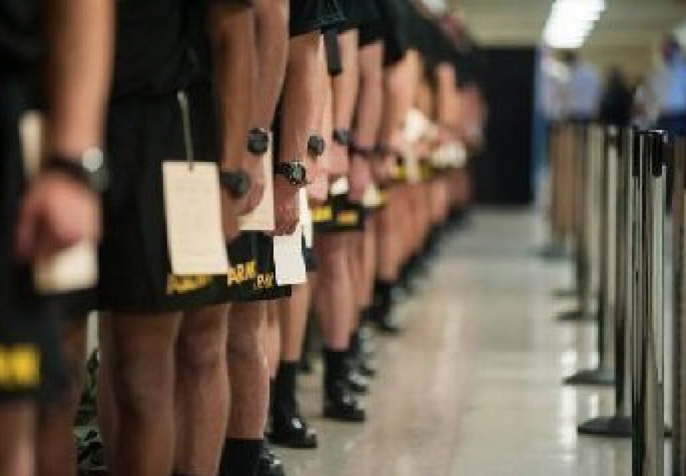
My first day as a cadet started out fine, as Newman Kopald, my best friend in Highland Falls High School, just south of West Point, drove me from the Lusk housing area on post down the hill to the Central Post Area where the cadet barracks are. I kind of knew what to expect—it was going to be a tough day with a lot of harassment. We were New Cadets, not yet Cadets until the end of Beast Barracks and the Acceptance Parade. We were assigned to a New Cadet Company and a room, given haircuts, a Physical Aptitude Exam, shots, a meal, instruction in marching, and a whole lot of uniforms, bedding, and a trunk. The man in the Red Sash directed everything. He would look at the tag attached to our gym shorts, once we had them, and direct us to the next Station.

In early afternoon I was directed to go the Cadet Store to be fitted for a pair of tropical worsted gray trousers—the summer version worn with a white short-sleeved shirt. We were issued the winter version in the fall. A tailor held up a pair of trousers by my side, measured the length and said to come back at 1630 (4:30PM) to pick them up. When I came back, someone found my shortened pair, held them up by my side, and pronounced them a good fit.

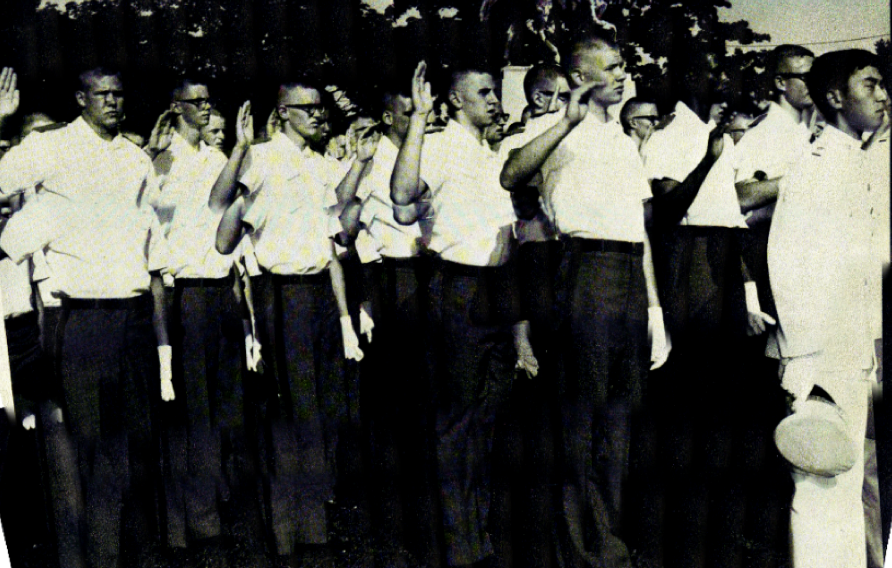
I tried to put on my uniform for the Swearing-In Ceremony about an hour later, and found that the trousers were about 26” waist size, and I had a 30” waist. I somehow got into them, but I could hardly breathe. I went to the formation, where the upperclassmen were inspecting us to make sure that we were ready to go. The New Cadets with the upperclassman who were detailed to lead them during the next month were to march onto the Plain and be administered the Oath of Office, which was supposed to officially enter them into the Army.
The temperature this day had been close to 100 degrees, and the humidity had been almost 100 per cent. Now with my waist cinched up too tightly, I was about to pass out when the upperclassman came to inspect me. He immediately saw that instead of going to the Plain with the rest of my class, he should take me to the hospital. I was given some pill, and—I kid you not—a prescription that said those trousers should be left loose around me, with the fly unzipped.
So 1136 New Cadets raised their right hands and took the Oath of Office out on the Plain. I did not.

But, I did have supper with my Company. Then after supper, we went to the North Auditorium of Thayer Hall where we actually signed Oaths making us members of the Army.
I had been at West Point since fifth grade, and my parents as well as many other observers expected to pick me and my five classmates from Highland Falls High out of the eight formations of New Cadets. Two and a half weeks later, after Sunday Mass, the Pastor said to me that he saw me at the Swearing-In Ceremony. I had to tell him that he had mistaken someone else for me.
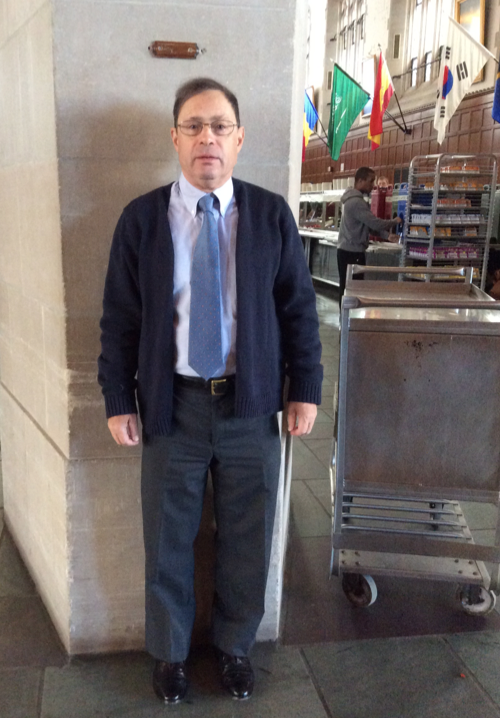
I was possibly the shortest cadet in the Corps, although there were some others who also had been waivered, and people noticed me right away. One upperclassman stood me up against a pillar in the Cadet Mess Hall, and stated that I was three and a butt blocks tall on the center pillar of the mess hall. (A butt means a part of something.) He told me that whenever anyone asked me how tall I was, I was to recite that fact.

The flags of the fifty states hung in various sections of the Mess Hall. Below each flag, at about the height of an average person, was a little plaque with the name of the state. Above the center pillar hung the flag of Maine with its corresponding plaque. The plaque was about four inches above me.

He then told me that if someone questioned my height and wasn’t satisfied with the first answer, then I was to say that I was four inches shorter that Maine. As you can imagine, no one was satisfied with my responses, and I endured a lot of grief because of that.
The next time we wore those tropical worsted gray trousers was at the very end of July. I had lost 19 pounds. Wonder of wonders, they fit perfectly. That was also the day I was measured for a Full Dress Coat, the one with all the buttons down the front. Despite my protestations to the contrary, saying that I would gain a lot of weight back, the tailors said
that they knew what they were doing. The next day, I was put on a weight-gain table for all meals. Sure enough, neither the trousers nor the coat fit when I tried them on again, and both had to be altered. Even though alternations were needed then, I never again needed medical instructions for wearing my gray trousers.
I knew better in 1993!